Set Up a Two-App Morning Workflow That Does Not Eat the Morning
A field-tested guide to limit morning planning to a calendar app and one capture app so the phone does not swallow the first hour with concrete phone checks, examples, and a short review path.

By Mira Chen · Published June 22, 2026 · 4 min read

The cleanest morning workflow I have tested is almost embarrassingly small: look at where the day is fixed, capture what is loose, then leave the phone alone.
This guide uses calendar plus capture app, seven minutes total because the useful version of limit morning planning to a calendar app and one capture app so the phone does not swallow the first hour has to work on a normal phone, not just in a tidy product screenshot.
Productivity advice on a phone has to survive interruptions, one-handed use, and short pockets of time. If a setup only works at a quiet desk, it is not really a mobile workflow.
What the setup has to solve
The first move is to define the job narrowly. For this topic, the job is to limit morning planning to a calendar app and one capture app so the phone does not swallow the first hour. That wording matters because it keeps the article away from a generic list of app tips.
A good first pass has one visible result: the first work block becomes visible without opening news, social, shopping, or email by reflex. If that result is hard to observe, shrink the setup until the signal becomes obvious.
In our workflow tests, Mira treats the phone like a field tool: if a step needs perfect attention, it gets cut or moved to a weekly review.
The trade-off is worth naming early: letting “just checking the calendar” become the excuse to open every app with a badge. That mistake feels harmless at the start because the phone makes every change look reversible, but attention and account data are harder to clean up later.
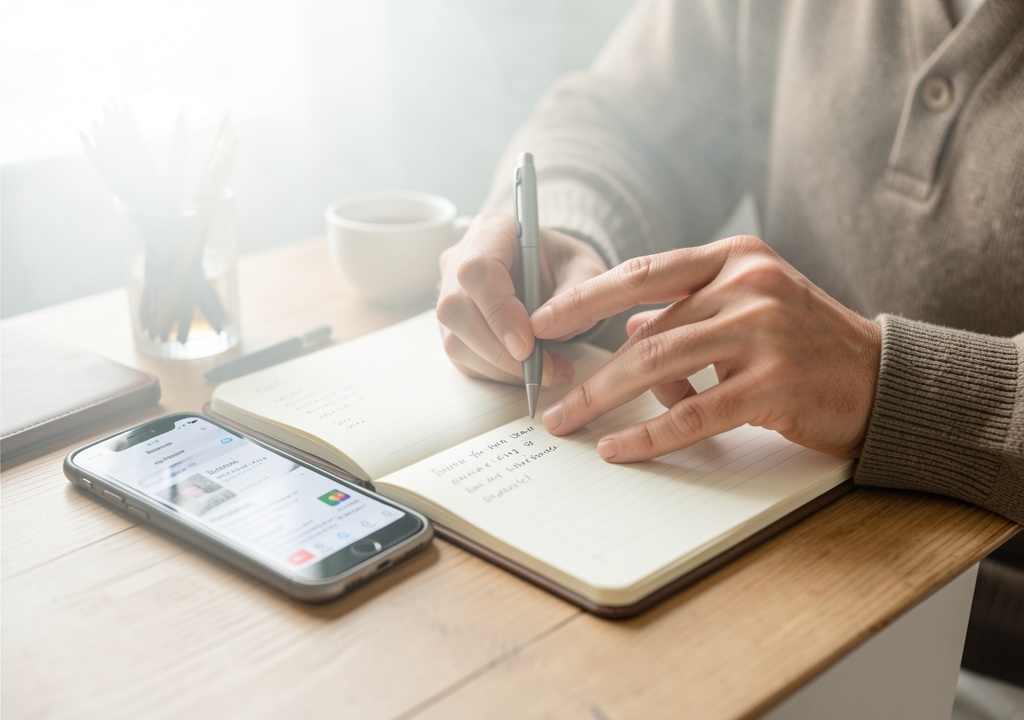
Build the first version
| Part of the workflow | What to check on the phone | Editorial rule |
|---|---|---|
| Calendar | fixed events, travel time, first commitment | Look once; do not start rearranging the week. |
| Capture app | worries, errands, loose thoughts | Dump them quickly so they stop looping. |
| Exit cue | timer, desk object, or first physical action | Give the routine a visible ending. |
Use the table as a small field test, not as a permanent doctrine. Open the relevant settings, app, folder, or dashboard and make one change at a time.
For set up a two-app morning workflow that does not eat the morning, the boring version is usually the right one. Boring means you can repeat it when the battery is low, when your thumb is tired, and when the day is already moving.
If a step requires a long explanation, label it as an experiment. Experiments are allowed to fail; permanent systems should earn their place after a few ordinary uses.
A practical test for the week
- Put both apps in one folder or focus mode.
- Use a timer for the first five test mornings.
- Do not process the capture inbox until later.
- Move tempting apps away the night before.
Try this for one week or for one complete use cycle. Do not redesign the whole phone on day one. The first test is only to see whether the first work block becomes visible without opening news, social, shopping, or email by reflex.
Write down one before-and-after note. It can be a number, a screenshot, a sentence in a notes app, or a simple observation such as “I stopped opening the wrong app after lunch.” Evidence keeps the next decision from turning into a mood check.
The review should be short enough to happen. If it takes more than five minutes, the system is already asking for more attention than it has earned.
What to leave out
The main thing to avoid is letting “just checking the calendar” become the excuse to open every app with a badge. It is tempting because it feels like progress while avoiding the slower question: what should the phone stop doing?
Also watch for hidden maintenance. A widget that needs daily grooming, an app that demands constant categorizing, or a folder that only one well-rested version of you understands will not stay useful.
When in doubt, remove one moving part. Mobile workflows improve faster when friction disappears than when another control panel is added.
Related reading
For nearby decisions, read A Morning Phone Routine That Does Not Steal the Morning, A Task App Triage System for Busy Weeks and Build a Calendar Widget Rhythm That Actually Helps.
Keep the useful part
Set Up a Two-App Morning Workflow That Does Not Eat the Morning works when it leaves a smaller, clearer phone habit behind. The test is not whether the setup looks sophisticated; it is whether the next useful action is easier to take.
Keep the pieces that help the first work block becomes visible without opening news, social, shopping, or email by reflex. Remove the pieces that mostly create checking, tweaking, or anxiety. That is where a mobile workflow starts to feel personal instead of packaged.
Read next

A Morning Phone Routine That Does Not Steal the Morning
A field-tested guide to limit morning phone use to alarms, calendar, messages, and one deliberate first action with concrete phone checks, examples, and a short review path.

A Task App Triage System for Busy Weeks
A field-tested guide to sort tasks on a phone during overloaded weeks without turning the task app into a second job with concrete phone checks, examples, and a short review path.

Build a Calendar Widget Rhythm That Actually Helps
A field-tested guide to make calendar widgets useful for context rather than turning the home screen into a tiny meeting wall with concrete phone checks, examples, and a short review path.